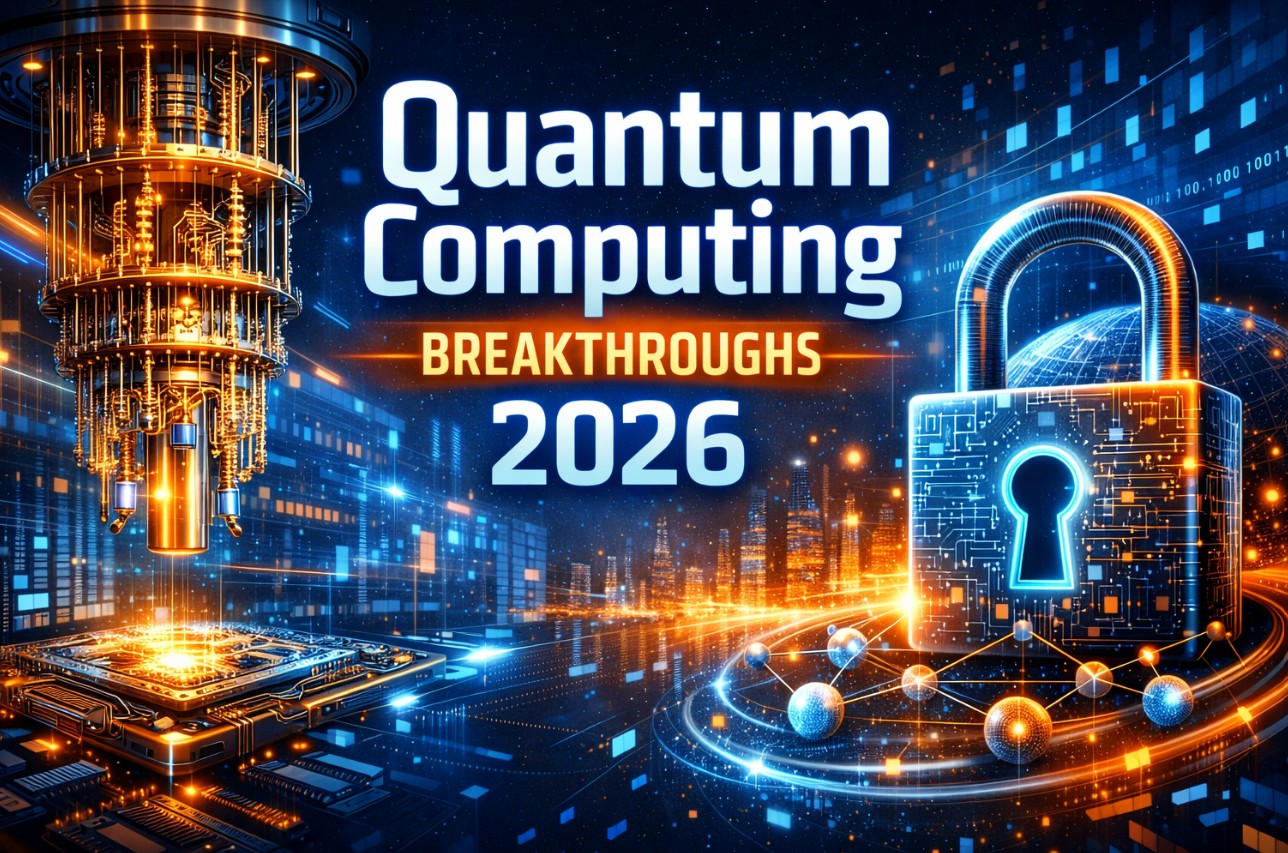
Quantum Computing Breakthroughs in 2026: The Next Big Threat and Opportunity for Digital Security
Quantum computing is no longer a far off logical concept—it is quickly getting to be a real-world drive with the control to rethink computerized security. By 2026, breakthroughs in quantum equipment, calculations, and cloud availability are pushing the innovation closer to standard selection. Whereas quantum computing guarantees uncommon propels in pharmaceutical, back, and manufactured insights, it moreover presents one of the most genuine cybersecurity challenges the computerized world has ever faced.
In 2026, quantum computing stands at a basic junction: a game-changing opportunity for secure development and a possibly destroying risk to today’s encryption systems.
Understanding Quantum Computing in 2026
Unlike classical computers that utilize double bits (0s and 1s), quantum computers work utilizing qubits, which can exist in different states at the same time through superposition and ensnarement. This permits quantum frameworks to perform calculations at speeds incredible for conventional machines.
By 2026, driving innovation companies such as IBM, Google, and Microsoft have illustrated quantum processors with hundreds—and in exploratory settings, thousands—of more steady qubits. Blunder redress, once the greatest impediment, has seen major enhancements, bringing fault-tolerant quantum computing closer to reality.
These progresses cruel quantum machines are no longer restricted to inquire about labs—they are progressively open through cloud stages, quickening advancement over industries.
Why Quantum Computing Is a Risk to Computerized Security
Breaking Present day Encryption
The establishment of cutting edge computerized security depends on cryptographic calculations that are numerically infeasible for classical computers to break. In any case, quantum calculations such as Shor’s Calculation can hypothetically break broadly utilized public-key encryption methods.
By 2026, the concern is no longer if quantum computers can break encryption—but when.
Commonly utilized benchmarks like RSA and elliptic bend cryptography secure everything from online keeping money to government communications. A adequately capable quantum computer may unscramble these securities in hours—or indeed minutes.
“Harvest Presently, Unscramble Later” Attacks
One of the greatest perils in 2026 is the rise of harvest-now, decrypt-later assaults. Cybercriminals and nation-states are as of now collecting scrambled information nowadays, putting away it until quantum computers ended up capable sufficient to unscramble it in the future.
This postures extreme dangers for:
- Government secrets
- Healthcare records
- Financial data
- Intellectual property
- Personal identities
Data that must stay private for decades is particularly vulnerable.
Quantum Computing as an Opportunity for More grounded Security
While quantum computing undermines existing encryption, it moreover opens the entryway to phenomenal security innovations.
Post-Quantum Cryptography (PQC)
In reaction to the quantum risk, analysts and governments are creating quantum-resistant calculations. By 2026, post-quantum cryptography has moved from hypothesis to early deployment.
Organizations such as NIST are driving worldwide endeavors to standardize encryption strategies that can withstand quantum assaults. These calculations are planned to be secure against both classical and quantum computers.
Forward-thinking endeavors are as of now starting crypto-agility strategies—systems that can rapidly switch encryption strategies as guidelines evolve.
Quantum Key Conveyance (QKD)
Another major opportunity is Quantum Key Dissemination, which employments the laws of quantum material science to secure communications. Any endeavor to captured a quantum key changes its state, promptly cautioning both parties to a breach.
By 2026, QKD is being tried and sent in:
- Government communications
- Financial institutions
- Defense networks
- Critical infrastructure
Although still costly and infrastructure-heavy, QKD speaks to the gold standard for ultra-secure communication.
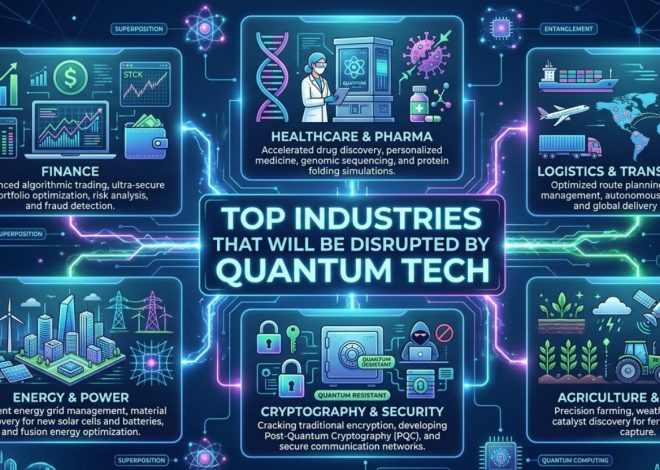
Impact on Key Industries
Financial Services
Banks and fintech companies are hustling to embrace quantum-safe encryption to secure exchanges, advanced wallets, and blockchain frameworks. A single quantum breach may trigger enormous money related precariousness, making early selection a competitive advantage.
Healthcare and Advanced Identity
Healthcare information must stay private for a lifetime. Quantum-resistant security guarantees persistent records, genomic information, and computerized personalities stay secured long into the future.
National Security and Defense
Governments see quantum computing as both a vital weapon and a protective shield. Countries driving in quantum security will hold noteworthy geopolitical points of interest in insights and cyber defense.
The Part of AI and Quantum Security
By 2026, counterfeit insights and quantum computing are merging. AI is being utilized to:
- Optimize quantum algorithms
- Detect quantum-based cyber threats
- Automate cryptographic migration
At the same time, quantum computing improves AI show preparing, empowering quicker danger discovery and more versatile cybersecurity systems.
How Businesses Ought to Plan in 2026
To remain ahead of the quantum transformation, organizations ought to take activity now:
Conduct Quantum Chance Evaluations – Distinguish frameworks depending on defenseless encryption.
Adopt Crypto-Agility – Guarantee frameworks can upgrade encryption strategies without major redesigns.
Implement Post-Quantum Pilots – Start testing quantum-safe algorithms.
Educate Security Groups – Quantum proficiency is getting to be a center cybersecurity skill.
Plan Long-Term Information Security – Secure touchy information against future unscrambling threats.
Quantum Computing: A Characterizing Security Moment
Quantum computing breakthroughs in 2026 stamp a characterizing minute in advanced security history. The same innovation that debilitates to disassemble today’s encryption moreover offers the apparatuses to construct a more secure, more strong advanced future.
Organizations that act early—investing in quantum-ready security strategies—will not as it were dodge disastrous dangers but pick up a effective competitive edge. Those who delay may discover their information uncovered in a post-quantum world.
In 2026, quantum computing is not fair the another huge thing—it is the following enormous test of worldwide computerized believe.