AI in Education 2025: Students Using Autonomous Tutors to Pass Exams
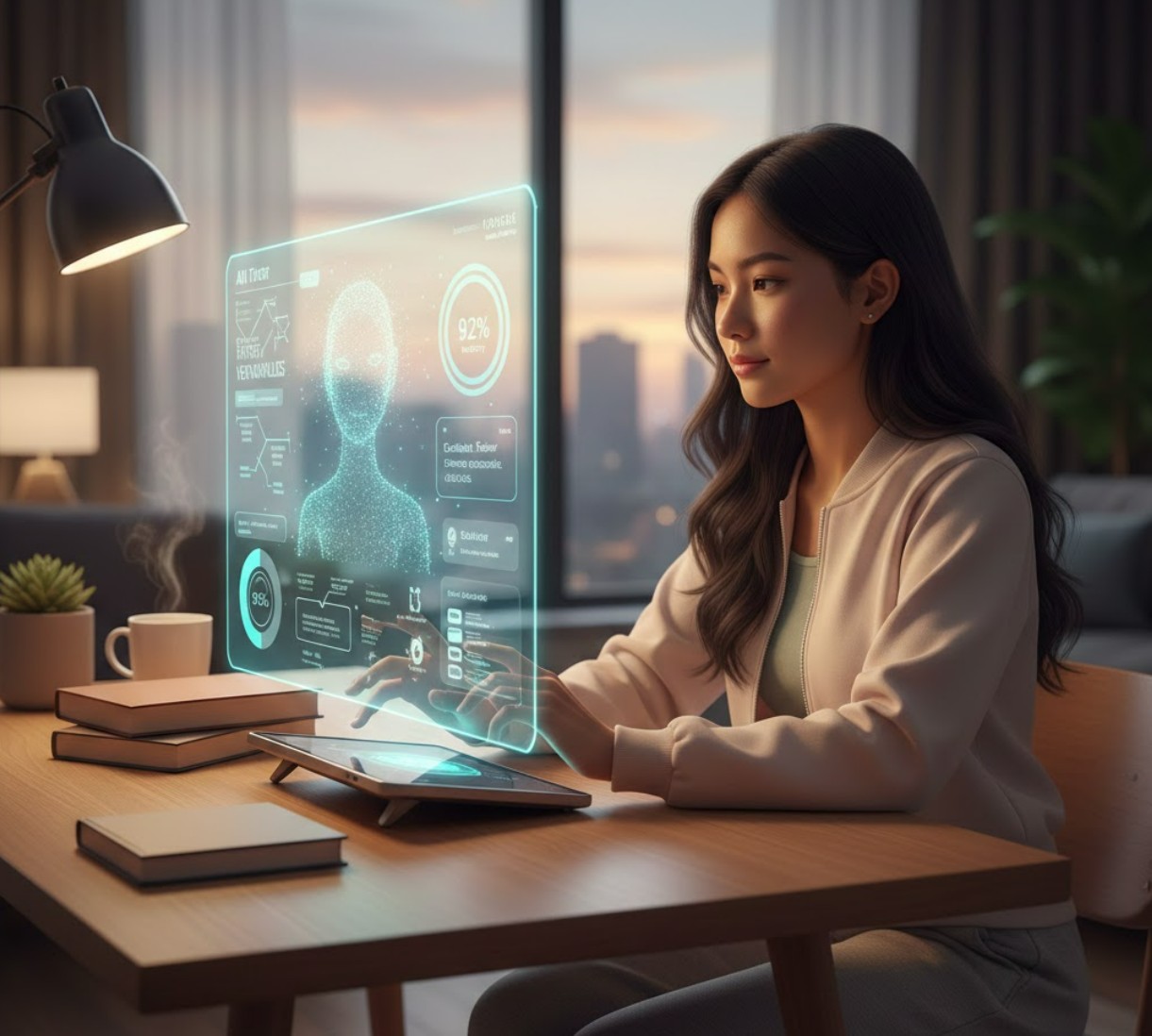
The year is 2025. The alarm on Maya’s smart device chirps softly, not with a jarring ring, but with a gentle, personalized melody. She stretches, still groggy, but a quick glance at her academic dashboard sparks a different kind of wakefulness. “Good morning, Maya,” a smooth, synthesized voice greets her from the device. “Your AI tutor, ‘Aether,’ has compiled your personalized learning plan for today, focusing on the historical context of the Treaty of Versailles, as identified as a high-priority area for your upcoming Modern European History exam.”
This isn’t science fiction anymore. This is the reality of education in 2025, where Artificial Intelligence has moved beyond simply being a tool and has become an indispensable, autonomous partner in a student’s academic journey. The era of the “autonomous tutor” is here, and it’s revolutionizing how students prepare for, and ultimately pass, their exams.
For decades, the promise of personalized education remained largely aspirational. Teachers, stretched thin by large class sizes and diverse learning needs, struggled to provide truly individualized attention. Textbooks offered a one-size-fits-all approach, and even the most dedicated human tutors faced limitations in availability and cost. Enter AI. By 2025, advancements in machine learning, natural language processing, and adaptive learning algorithms have converged to create AI tutors that are not only intelligent but also profoundly empathetic and dynamic.
Aether, like thousands of other AI tutors across the globe, is more than just a sophisticated search engine. It has a comprehensive understanding of Maya’s learning style, her strengths, her weaknesses, and even her emotional state on a given day. Through continuous interaction, Aether has built a detailed profile of Maya’s cognitive patterns, identifying when she’s most receptive to new information, what types of explanations resonate best with her, and even when she’s experiencing cognitive overload. This allows Aether to adjust its teaching methods on the fly, offering visual aids when Maya struggles with abstract concepts, providing historical anecdotes to pique her interest, or breaking down complex topics into digestible micro-lessons when her attention span wanes.
The core of this revolution lies in the AI tutor’s ability to act as an autonomous agent. Unlike earlier iterations of educational software that merely presented information, autonomous tutors actively guide, assess, and intervene. They don’t just point out mistakes; they diagnose the underlying misconception. If Maya consistently misinterprets cause-and-effect relationships in history, Aether won’t just tell her she’s wrong; it will generate a series of interactive exercises designed to strengthen that specific cognitive skill, drawing from a vast, ever-expanding database of educational content.
The impact on exam preparation is profound. Gone are the days of rote memorization and last-minute cramming. Aether, having monitored Maya’s progress throughout the semester, already knows precisely which topics she has mastered and which require further attention. It continuously analyzes her practice test results, her contributions to online discussions, and even her engagement with supplementary materials. Based on this holistic data, Aether constructs a dynamic, hyper-personalized study schedule. For Maya’s Modern European History exam, Aether isn’t just reviewing the syllabus; it’s meticulously pinpointing the exact historical figures, treaties, and social movements that Maya is most likely to struggle with, generating targeted practice questions and explanations that anticipate potential exam pitfalls.
Consider the scenario just before an exam. Instead of flipping through notes frantically, Maya engages in a simulated exam experience with Aether. The AI tutor generates a mock exam that mirrors the style and difficulty of the real assessment, complete with timed sections and diverse question formats. As Maya answers, Aether provides real-time feedback, not just on correctness, but on the reasoning behind her answers. “You’ve correctly identified the key provisions of the Treaty of Versailles, Maya,” Aether might say, “but your explanation of its long-term economic impact is a little underdeveloped. Let’s review the economic clauses and their effects on Germany in the interwar period.” This immediate, precise, and actionable feedback is something no human tutor could provide on such a continuous and individualized basis.
Furthermore, autonomous tutors are not confined to a single subject. Many students in 2025 have a suite of AI tutors, each specializing in a particular discipline, seamlessly integrated into a unified learning platform. Aether might be Maya’s history expert, while “Pythagoras” handles her advanced calculus, and “Lingua” refines her Mandarin Chinese. These tutors can even collaborate, cross-referencing concepts and offering interdisciplinary insights, preparing students not just for individual exams, but for a holistic understanding of complex subjects.
The ethical considerations and challenges, of course, are not insignificant. Concerns about over-reliance on AI, the potential for algorithmic bias, and the impact on human teacher roles have been extensively debated and addressed. By 2025, robust ethical frameworks and regulatory guidelines have been established to ensure AI tutors are used responsibly, supplementing rather than replacing human educators. Teachers have evolved into facilitators and curriculum designers, working in tandem with AI to create richer, more engaging learning environments. The focus has shifted from delivering information to fostering critical thinking, creativity, and collaborative skills – areas where human interaction remains paramount.
The financial implications are also being addressed. While initial development costs for advanced AI tutors were high, economies of scale and open-source initiatives have made these technologies increasingly accessible to students from all socioeconomic backgrounds. Governments and educational institutions are investing heavily in providing equitable access, recognizing AI-driven personalized learning as a fundamental right rather than a luxury.
As Maya finishes her day’s learning modules, Aether provides a concise summary of her progress, highlights areas for further review, and offers encouragement. “Excellent work today, Maya. You’ve made significant progress in understanding the complexities of post-World War I Europe. Keep up the consistent effort.” The voice is reassuring, the feedback constructive. Maya feels a sense of accomplishment, not just from completing tasks, but from truly grasping the material. With Aether by her side, the daunting prospect of exams has transformed into a manageable, even enjoyable, challenge. The future of education in 2025, powered by autonomous AI tutors, is one where every student has the personalized support they need to not just pass exams, but to truly thrive.