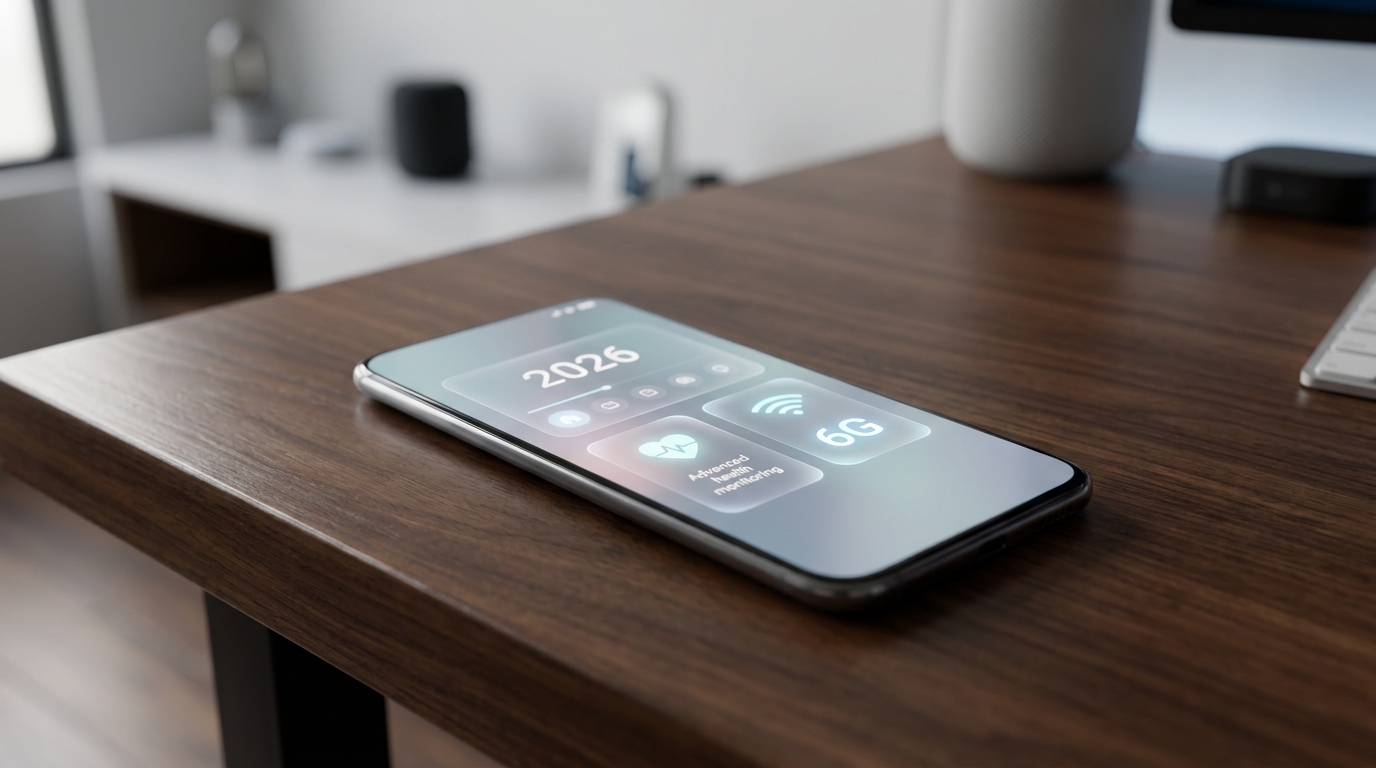
The Evolution of Smartphones: What Can We Expect in the Next 5 Years (2026 – 2031)?
Curious about the future of mobile tech? From AI agents to rollable screens, discover how the evolution of smartphones will change our lives between 2026 and 2031.
Here we are in 2026. If you look around, it might seem like smartphone innovation has slightly plateaued. Sure, our cameras take better low-light photos, foldable phones are finally affordable, and built-in AI can write our text messages for us. But physically, a phone is still a rectangular slab of glass in our pockets.
However, behind the closed doors of the world’s biggest tech labs, a massive revolution is brewing. The smartphone is about to undergo its biggest transformation since the invention of the original touchscreen. As we look ahead to the next five years—leading up to 2031—our devices are going to shift from simple communication tools into invisible, autonomous life companions.
Here is exactly what we can expect from the incredible evolution of smartphones in the next five years.
1. The Death of the “App Grid” (Hello, AI Agents)
For the last 15 years, we have interacted with our phones by staring at a grid of colorful app icons. You open an app to check the weather, close it, open another app to book a flight, and open another to check your bank balance.
By 2030, the traditional “App Grid” will be obsolete. Instead, our phones will be powered by “Agentic AI.” You will simply tell your phone, “Plan a weekend trip to the mountains for me, book a hotel under $100 a night, and make sure it doesn’t rain.” The AI agent will seamlessly talk to various services in the background, complete the payment, and put the itinerary on your calendar—all without you ever opening a single app.
2. Beyond Folding: Rollable and Stretchable Screens
Foldable phones are great in 2026, but they still have hinges and creases. The next major leap in hardware is the “Rollable” smartphone.
Imagine holding a normal, standard-sized smartphone. With the tap of a button, hidden micro-motors silently unroll extra screen real estate from inside the chassis, expanding the phone into a full-sized tablet in seconds. There are no creases, no hinges to break, and no bulk. By 2031, we will also see the introduction of stretchable OLED displays that can physically change texture, allowing you to feel buttons on a flat glass screen while typing.
3. Solid-State Batteries: The End of “Low Battery” Anxiety
The biggest complaint about smartphones has always been battery life. Lithium-ion batteries have reached their physical limits. However, the next five years will see the commercial rollout of “Solid-State Batteries” for mobile devices.
These batteries replace the liquid inside current batteries with a solid conductive material. The result? A smartphone that is significantly lighter, completely fireproof, and holds a charge for three to four days of heavy use. Combined with over-the-air true wireless charging—where your phone charges automatically just by walking into your living room—battery anxiety will become a thing of the past.
4. The Phone Becomes the “Invisible Brain”
Will we even look at our phones in 2031? Maybe not as much. As lightweight, stylish Augmented Reality (AR) glasses become mainstream, the smartphone will transition into a “processing hub” that stays hidden in your pocket or purse.
Instead of pulling out your phone to look at Google Maps, your phone will wirelessly beam the directions directly into your AR glasses, painting arrows on the physical street in front of you. The smartphone will provide the battery power, 6G internet connection, and AI processing, but your eyes and voice will become the actual display and keyboard.
5. A Medical Clinic in Your Pocket
Smartwatches are already great at tracking our heart rates, but smartphones are going to become FDA-approved medical diagnostic tools. Using advanced spectroscopy and highly sensitive infrared lasers, the smartphone of the near future will be able to read your blood sugar levels, hydration, and blood alcohol content simply by having you press your finger against the camera lens. No needles, no blood, just instant health data.
Conclusion
The smartphone of 2031 will barely resemble the devices we are using today. It will be a rollable, multi-day battery powerhouse that acts as an autonomous personal assistant, a medical clinic, and the invisible brain for our wearable tech. We are standing on the edge of a new era of personal computing. The glass slabs we carry today are just the beginning of a hyper-connected, incredibly intelligent future.
Which future smartphone feature are you most excited about? Let us know in the comments section below!