Best Password Managers for Businesses in 2026
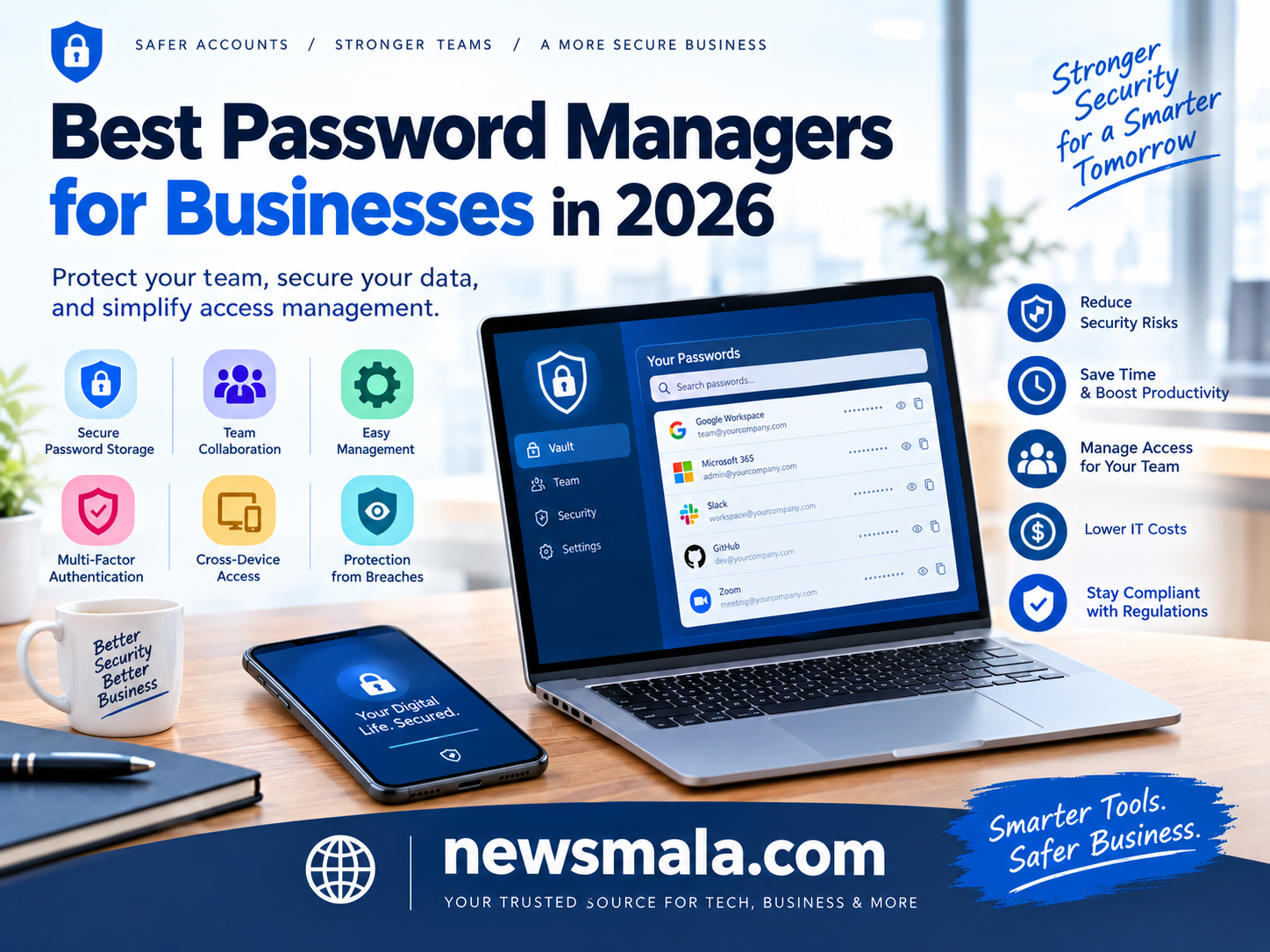
Credential compromise continues to drive the overwhelming majority of unauthorized data breaches, and enterprise password managers are now a non-negotiable security layer. Distributed teams, cloud sprawl, and shadow IT make unmanaged passwords, plaintext spreadsheet sharing, and reused login credentials existential risks for modern organizations.
A corporate password manager does more than generate strong passwords. It enforces Single Sign-On (SSO) bridging, automates onboarding/offboarding via SCIM, audits credential hygiene, protects passkeys, and secures developer secrets.
Top Business Password Managers Compared
| Provider | Target Audience | Starting Business Price | Deployment Options | Key Standout Feature |
| 1Password Business | Mid-market to Enterprise | $7.99 / user / mo | Cloud | Intuitive UX, Watchtower auditing, Secret Key architecture |
| Bitwarden Enterprise | DevOps & Regulated SMBs | $4 – $6 / user / mo | Cloud or Self-Hosted | Open-source codebase, on-premise hosting, Secrets Manager |
| Keeper Business | Strict Compliance & Public Sector | $3.75 – $5 / user / mo | Cloud | FedRAMP Authorized, zero-trust architecture, KeeperPAM |
| NordPass Business | Fast-Growing SMBs | $3.99 – $5.99 / user / mo | Cloud | XChaCha20 encryption, clean UI, smooth Microsoft 365 sync |
| Dashlane Business | Remote-First Distributed Teams | $8 / user / mo | Cloud | Real-time employee phishing alerts, automated SSO |
1. 1Password Business: Best Overall User Adoption & Experience
Employee resistance is the fastest way to derail a password management rollout. 1Password remains the gold standard for usability, reducing internal friction with a polished interface across desktop, browser, and mobile.
-
Security Architecture: 1Password uses dual-layer encryption. Vaults are secured with an employee-chosen Master Password combined with a 128-bit machine-generated Secret Key stored locally on authorized devices. Even if an attacker compromises server data, they cannot decrypt the vault without that local secret key.
-
Administrative Controls: Robust role-based access control (RBAC), automated provisioning via SCIM (integrating with Okta, Microsoft Entra ID, and Google Workspace), and granular vault permissions.
-
Watchtower & SIEM Integration: Flags compromised, weak, or reused passwords company-wide and streams audit logs directly into SIEM tools like Splunk or Datadog for real-time compliance alerting.
-
Best For: Companies that prioritize rapid employee adoption, cross-platform stability (macOS, Windows, Linux, iOS, Android), and developer CLI workflows.
2. Bitwarden Enterprise: Best for Open-Source Transparency & DevOps
For organizations with stringent data sovereignty rules or technical teams that manage machine secrets alongside human logins, Bitwarden is the premier choice.
-
Open-Source Auditing: Bitwarden’s complete source code is public and regularly audited by independent third-party security firms, verifying zero backdoors or flawed cryptographic implementations.
-
Flexible Infrastructure: Unlike closed-source competitors, Bitwarden allows teams to host vaults in the secure Bitwarden Cloud or self-host on private infrastructure (Docker containers on AWS, Azure, or bare-metal servers).
-
Developer Secrets Management: Bitwarden Secrets Manager integrates directly into CI/CD pipelines (GitHub Actions, GitLab, Jenkins) to inject API keys and database credentials securely without hardcoding them into codebases.
-
Pricing Advantage: At $4/user/month for Teams and $6/user/month for Enterprise (which includes SSO and SCIM), Bitwarden provides the lowest total cost of ownership among enterprise-grade solutions.
3. Keeper Business: Best for Strict Regulatory Compliance & FedRAMP
When government contracts, healthcare mandates (HIPAA), or defense requirements (CMMC) dictate your software stack, Keeper is the front-runner.
-
Compliance Accreditations: Keeper holds FedRAMP Authorized and StateRAMP designations, along with SOC 2 Type II and ISO 27001 certifications.
-
Zero-Knowledge Privilege Architecture: Keeper uses multi-tenant zero-trust encryption where data is encrypted and decrypted at the device level, preventing unauthorized access even from internal Keeper administrators.
-
KeeperPAM Extension: Businesses can scale from basic password storage directly into Privileged Access Management (PAM), securing RDP, SSH, and database endpoints with ephemeral credentials and session recording.
-
Best For: Regulated financial institutions, healthcare providers, defense contractors, and enterprise IT teams replacing legacy on-premise PAM solutions.
4. NordPass Business: Best for Value-Conscious SMBs
Backed by the cybersecurity infrastructure of Nord Security, NordPass provides a streamlined, lightweight password vault that requires virtually zero onboarding friction.
-
Modern Cryptography: Instead of traditional AES-256, NordPass utilizes the XChaCha20 encryption algorithm, which is faster on mobile hardware and eliminates cache-timing attack vectors.
-
Passkey Leadership: NordPass has prioritized full passkey management across browsers, allowing businesses to replace master credentials with biometric/FIDO2 web authentication natively.
-
Affordable Scaling: Tiered plans allow growing companies to deploy core security features without paying enterprise surcharges for advanced PAM features they do not need.
Critical Capabilities for Enterprise Deployment
Before choosing a solution, confirm that these operational requirements are addressed:
Zero-Knowledge Architecture
Never select a vendor that stores master encryption keys on their servers. True zero-knowledge architecture ensures that all encryption and decryption occurs locally on the client’s endpoint device. If the vendor’s cloud servers are breached, the attacker only obtains indecipherable ciphertext.
Automated Provisioning (SSO & SCIM)
Manual credential management fails as soon as teams scale past 20 people. Look for:
-
SAML 2.0 / OIDC: Users log in using their primary corporate identity (Google Workspace, Microsoft Entra ID, Okta).
-
SCIM (System for Cross-domain Identity Management): When an employee is removed from your corporate directory, their access to all shared company vaults, credentials, and customer portals terminates immediately.
Granular Vault Segmentation
Shared master logins to critical platforms (AWS root accounts, corporate bank portals, Stripe) should not sit in a single company-wide vault. Platforms must allow department-level vault segregation (e.g., Finance, Engineering, Marketing) and hide raw passwords from employees who only require autofill access.
Selecting the Right Vendor
-
Choose 1Password if your priority is effortless employee adoption, intuitive UX across all desktop and mobile platforms, and streamlined team sharing.
-
Choose Bitwarden if you operate within an engineering-centric organization, want a self-hosted option, or need programmatic secrets management alongside human logins.
-
Choose Keeper if you must satisfy public-sector compliance, HIPAA, CMMC, or demand integrated privileged session monitoring.